In 2025, the regulatory tide turned against sweepstakes casinos faster than anyone in the industry expected. Six US states passed legislative bans targeting the dual-currency model, and the list includes two of the largest consumer markets in the country. These weren’t close votes or procedural footnotes — several passed with near-unanimous support, signaling a level of bipartisan consensus that’s rare in state gambling policy.
The 2025 sweepstakes bans didn’t happen in isolation. They followed years of growing tension between the traditional gaming industry (backed by the AGA), state regulators frustrated by enforcement challenges, and sweepstakes operators who argued their model was legal under existing sweepstakes law. By the end of the year, the combined economic impact of these bans reshaped revenue projections for the entire sector.
This article breaks down every 2025 ban individually — the bills, the votes, the enforcement timelines, and how operators responded when their biggest markets disappeared overnight.
Every 2025 Ban — Bill Numbers, Sponsors, and Vote Counts
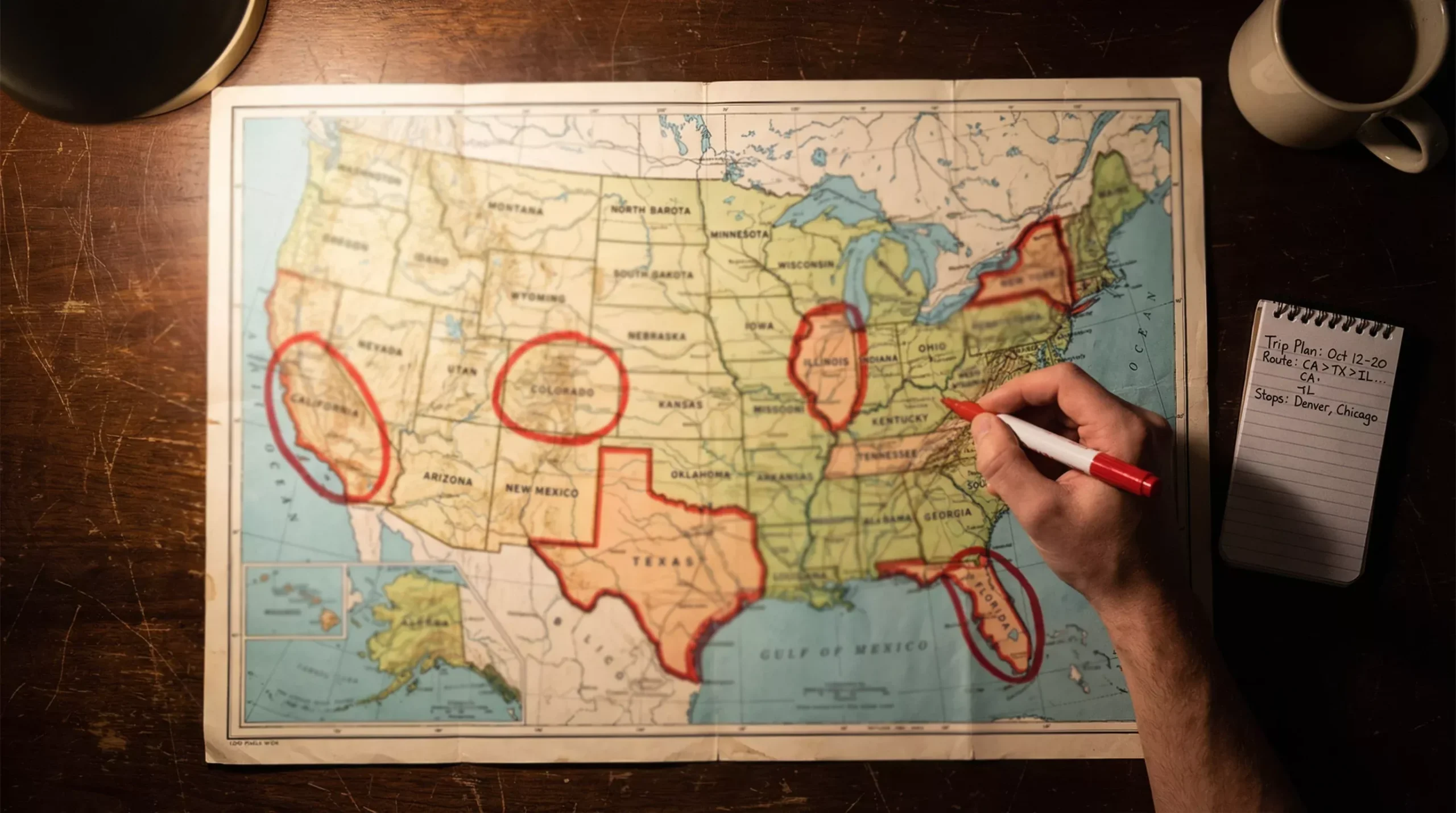
Six states enacted sweepstakes casino bans in 2025. Each followed a slightly different legislative path, but the result was the same: sweepstakes operators using the dual-currency model were explicitly classified as illegal gambling operations.
| State | Bill | Key Action | Revenue Impact |
|---|---|---|---|
| California | AB 831 | Senate 36-0, Assembly 63-0 | ~20% of US sweepstakes revenue |
| New York | SB 5935A | Signed into law 2025 | $762M in purchases (2024) |
| Montana | SB 555 | Passed 2025 | Smaller market |
| Connecticut | SB 1235 | Passed 2025 | Moderate |
| New Jersey | AB 5447 / SB 4282 | Passed 2025 | Significant (existing iGaming market) |
| Nevada | SB 256 | Strengthened penalties; felony for unlicensed operators | Moderate |
California’s AB 831 was the most consequential ban by every measure. The state accounted for roughly 20% of total US sweepstakes revenue, and New York generated $762 million in Gold Coin purchases during 2024 alone. When Governor Newsom signed AB 831, the California legislature had passed it without a single dissenting vote — 36-0 in the Senate, 63-0 in the Assembly. As Shawn Fluharty, President of the National Council of Legislators from Gaming States (NCLGS), remarked at a G2E Las Vegas panel: “[Sweepstakes] couldn’t get one vote in California. You know how hard that is? They can’t agree on the color of the carpet.”
New York’s SB 5935A followed California’s lead with similar momentum. The state’s existing commercial gaming industry lobbied hard for the ban, arguing that sweepstakes operators were siphoning revenue without paying state gaming taxes or submitting to regulatory oversight. New Jersey — already home to one of the most mature iGaming markets in the US — moved to protect its licensed operators by passing AB 5447 alongside companion bill SB 4282, explicitly targeting the sweepstakes dual-currency model.
Montana and Connecticut passed their bans with less national attention but equal legal force. Connecticut’s SB 1235 was particularly notable because VGW had already voluntarily exited the state in late 2024, effectively conceding the market before the legislature acted. Nevada’s ban completed the picture — a state synonymous with gambling deciding that sweepstakes casinos didn’t belong within its borders was symbolically potent, even if the market size was relatively modest.
When Each Ban Took Effect and What Changed
Legislative bans don’t always take effect immediately. Each state set its own enforcement timeline, creating a staggered rollout that gave operators varying amounts of time to wind down operations and process pending player redemptions.
California’s ban included a grace period after signing, during which operators were expected to cease accepting new customers and begin processing outstanding prize redemptions. The practical effect was felt within weeks: major platforms began geoblocking California IP addresses and sending notifications to registered users in the state. For a market that represented one-fifth of national sweepstakes revenue, the cutoff was abrupt and deeply felt across the industry.
New York’s enforcement followed a similar pattern, with the state’s gaming commission taking an active role in monitoring compliance. Operators that failed to exit promptly faced the threat of enforcement action — not just fines, but potential criminal referrals under the state’s expanded definition of illegal gambling. The $762 million in annual purchases that New York represented vanished from operator balance sheets within a single quarter.
The cumulative financial impact materialized in revised industry forecasts. Eilers & Krejcik Gaming, the primary analyst tracking sweepstakes economics, cut its 2025 net revenue projection from $4.7 billion to $4 billion — a $700 million downward revision driven primarily by the California ban. For 2026, the base-case forecast projects a further 10% decline to $3.6 billion, reflecting the full-year impact of all six 2025 sweepstakes bans plus ongoing enforcement pressure in additional states. The growth story that had defined sweepstakes casinos since 2020, with 60–70% annual CAGR, hit a wall.
For players in affected states, the enforcement timeline mattered most in one specific way: what happened to their existing SC balances. Most operators honored pending redemption requests from players in newly banned states, though processing times stretched as platforms managed the administrative load of mass account closures. Players who had accumulated but not yet redeemed large SC balances faced the most anxiety — and the lesson was clear for users in states considering similar legislation: redeem regularly, don’t stockpile.
How Operators Responded to Each Ban
Operator responses split along a predictable line: large operators complied quickly and publicly; smaller operators dragged their feet or went quiet.
VGW — the parent company of Chumba Casino, Global Poker, and LuckyLand Slots — moved fastest. The company had already begun voluntarily exiting states where regulatory pressure was mounting, including Connecticut in late 2024. When the 2025 sweepstakes bans took effect, VGW geoblocked affected states within the statutory compliance window, emailed registered users about the changes, and processed pending redemptions. The company’s willingness to comply wasn’t born of altruism — VGW was simultaneously facing class-action lawsuits and regulatory scrutiny in multiple jurisdictions, and picking a fight with state legislatures would have worsened an already complicated legal position.
The Social Gaming Leadership Alliance (SGLA), the industry trade group representing sweepstakes operators, adopted a different posture. Rather than fighting the 2025 sweepstakes bans directly, the SGLA pivoted to a pro-regulation message, arguing that sweepstakes casinos should be brought under a regulatory framework with licensing, taxation, and consumer protections — rather than banned outright. The strategy aimed at states that hadn’t yet acted, positioning the industry as a willing partner for regulation rather than an outlaw to be shut down.
Smaller operators presented a more chaotic picture. Some complied with new bans immediately. Others tested enforcement by continuing to accept players from banned states for weeks or months after the effective date, gambling — ironically — that understaffed state regulators wouldn’t catch them quickly. A few simply shut down entirely, unable to absorb the loss of major markets without the financial cushion that larger operators maintained.
The pattern of non-compliance from smaller operators created a secondary problem: it gave regulators in states still considering bans additional ammunition. Every operator that flouted a ban in California or New York became a data point in legislative presentations in Florida, Indiana, and other states where sweepstakes bills were pending. The industry’s worst actors made life harder for operators trying to build a case for regulatory inclusion rather than blanket prohibition.
For players, the takeaway is straightforward: when a ban hits your state, stick with operators that have a track record of compliance and transparent communication. The platforms that go quiet during regulatory transitions are the ones most likely to leave your balance in limbo.